

Required permission:
- View panic alert, to receive and resolve emergency alerts
- Trigger panic button, for the field user who presses the button
- View tracking, to open the alert on the Tracking page
- View Chat on Web, to message the field user from the alert
A Real Case: Rizky’s Breakdown on Jalan Asia Afrika
Rizky is a courier delivering to the Braga area of Bandung in the afternoon. His motorbike breaks down on Jalan Asia Afrika and a stranger starts pressuring him to hand over his packages. He presses the Panic Button in the mobile app. Dewi is the dispatcher on duty at the Bandung hub. The rest of this page follows what Dewi sees and does, step by step.The screenshots on this page come from a test account, so the field user’s name shows as “test” rather than Rizky. Everything else, including the address, appears exactly as it does for a real alert.
1. The Emergency Alert Appears
Within a few seconds of Rizky pressing the button, an Emergency Alert appears over whatever page Dewi has open. It cannot be missed, so an emergency never waits in the background.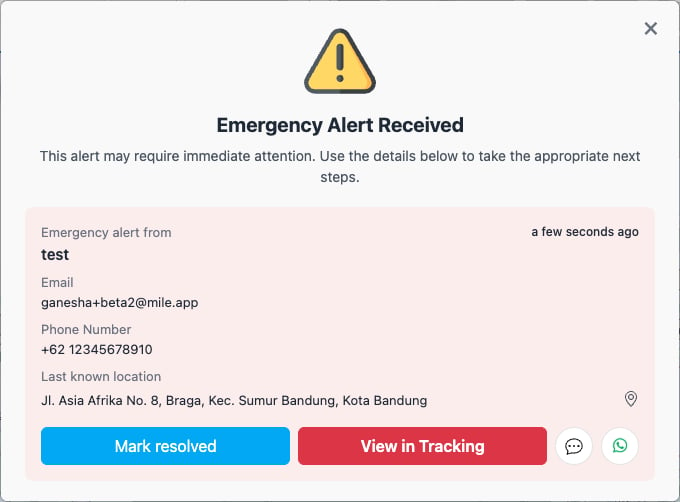
The Emergency Alert, showing who pressed the button and where
The alert shows:- Emergency alert from: the field user who pressed the button. MileApp takes this from their own account, so an alert always shows the person who actually pressed it.
- Email and Phone Number: taken from that field user’s MileApp account.
- Last known location: the address where the button was pressed. If the phone had no GPS signal at that moment, MileApp uses the most recent location it has for that user.
- How long ago the alert was raised, in the top right corner.
2. Choose What to Do
Each card has four actions in one row:- Mark resolved: marks the emergency as handled. Use it once the field user is safe.
- View in Tracking: opens the Tracking page on the field user, so you can see where they are on the map.
- Chat Driver (the chat bubble): opens a MileApp chat with the field user. This closes the alert so you can see the conversation.
- WhatsApp (the green icon): opens WhatsApp with the field user’s phone number already filled in.
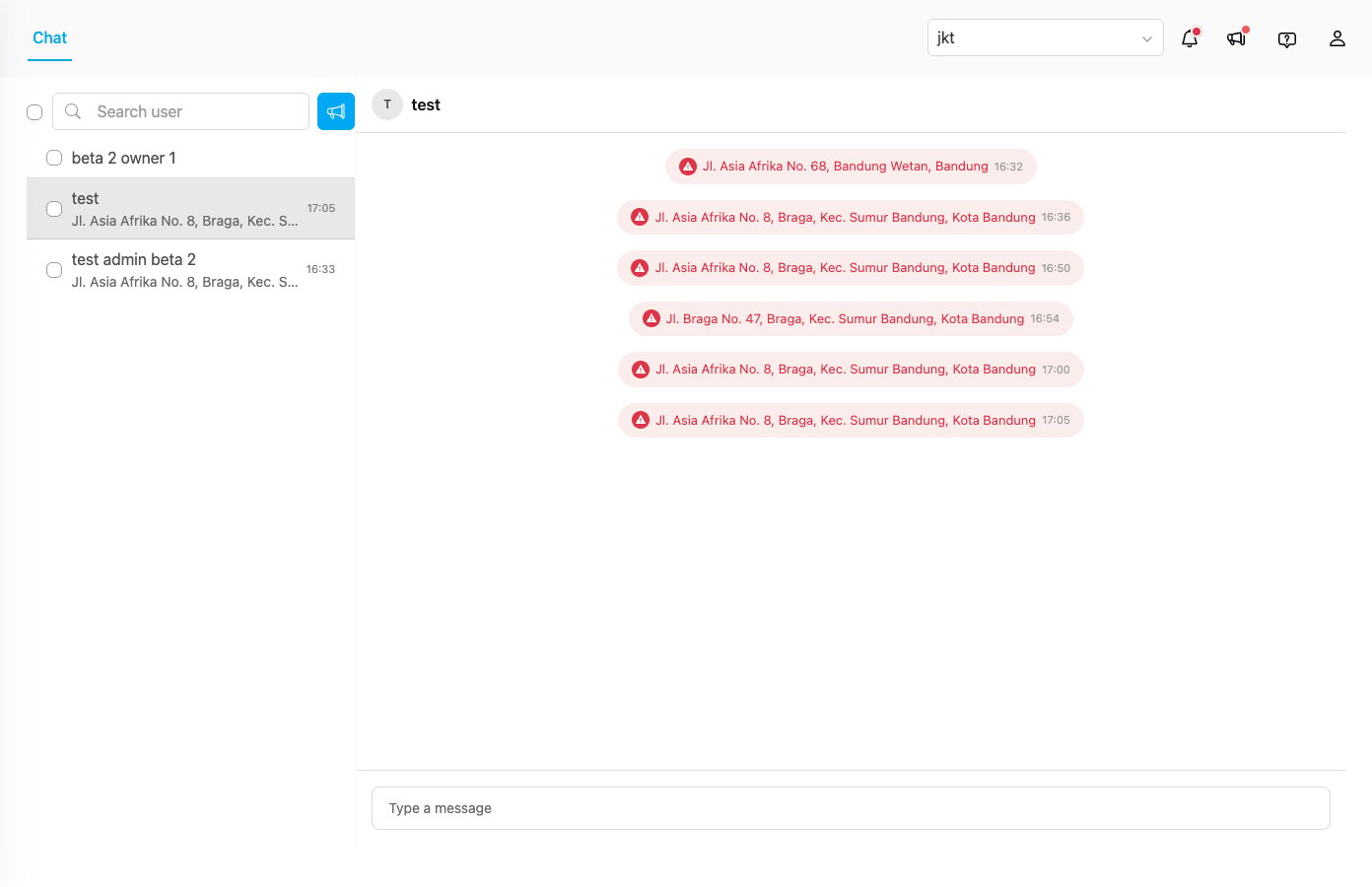
Chat Driver opens a conversation with the field user who raised the alert
3. See the Field User on the Map
Dewi clicks View in Tracking. The Tracking page opens with a red emergency marker at the place Rizky pressed the button. Clicking the marker shows the same details and actions as the alert.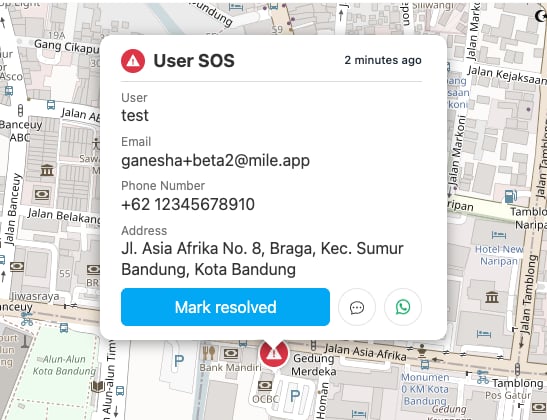
The emergency marker and its details on the Tracking page
4. Mark the Emergency as Resolved
Dewi sends the nearest team to Rizky. Once he is safe, she clicks Mark resolved on the marker. The marker turns grey and shows who resolved it. Hover over the name to see that person’s email.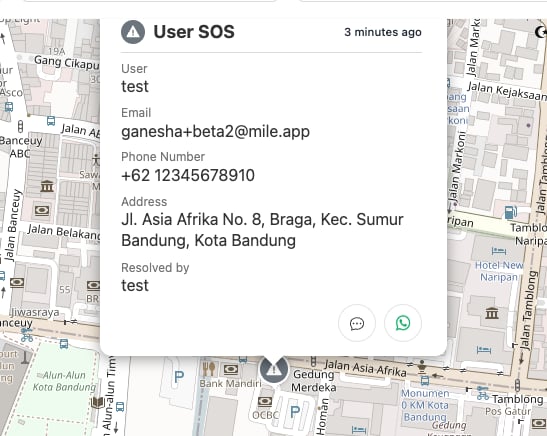
A resolved emergency, showing who handled it
Resolving an emergency closes the alert for everyone in your organization, not only for you. Other dispatchers no longer see it appear, so nobody acts on an emergency that is already handled.Closing the Alert Without Resolving It
If you need to see the page behind the alert, click the X in the top right corner. This hides the alert for now, but does not resolve the emergency:- It stays hidden while you keep working on other pages.
- It appears again when you reload the page, because the emergency is still open.
- It stays in your notifications, unread.
Emergency Alerts in Your Notifications
Every emergency alert is also added to the notification bell at the top of the page, so you have a record even after the alert is closed. Click an entry to open it on the Tracking page.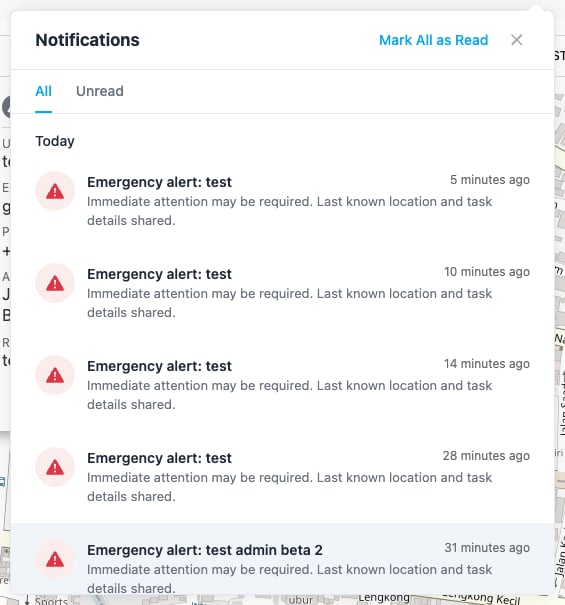
Emergency alerts are kept in the notification list
The full-screen alert only appears for emergencies raised today. An older emergency that was never resolved does not interrupt you again, but it stays in your notifications so you can still follow it up.